人工智能常用黑话
-
AI (artificial intelligence): simulate human intelligence
-
AI(人工智能):模拟人类智能
-
AI ethics: the AI is developed and used responsibly, safe, secure, unbiased, and environmentally friendly
-
人工智能伦理:人工智能的开发和使用是负责、安全、可靠、公正、环保的
-
Algorithm: a sequence of rules to perform a task or solve a problem, it include classification, regression, and clustering.
-
算法:执行任务或解决问题的一系列规则,包括分类、回归和聚类。
-
Application programming interface (API):a set of protocols that determine how two software applications will interact with each other.
-
应用程序编程接口(API):两个软件如何交互的协议。
-
Big data: the large data sets that can be studied to reveal patterns and trends.
-
大数据:用来研究揭示模式和趋势的海量数据集。
-
Chatbot: imitate human conversation.
-
聊天机器人:模仿人类对话。
-
Cognitive computing: same as AI
-
认知计算:和人工智能一样
-
Computer vision: understand images and videos
-
计算机视觉:理解图像和视频
-
Data mining: sorting through large data sets to identify patterns that can improve models or solve problems.
-
数据挖掘:对大型数据集进行分类,以确定可以改进模型或解决问题的模式。
-
Data science: uses algorithms and processes to gather and analyze large amounts of data to uncover patterns and insights that inform business decisions.
-
数据科学:使用算法和流程来收集和分析大量数据,以发现新模式和新视野,为业务决策提供信息。
-
Deep learning: imitates the human brain by learning from how it structures and processes information to make decisions. Instead of relying on an algorithm that can only perform one specific task, deep learning can learn from unstructured data without supervision.
-
深度学习:通过学习人脑如何构建和处理信息来做出决策。深度学习不是只能执行一项特定任务的算法,他可以在没有监督的情况下从非结构化数据中学习
-
Emergent behavior: when an AI system shows unpredictable or unintended capabilities.
-
紧急行为:AI系统表现出不可预测或意想不到的能力。
-
Generative AI: uses AI to create content, including text, video, code and images. A generative AI system is trained using large amounts of data, so that it can find patterns for generating new content.
-
生成式AI:使用AI来创建内容,包括文本、视频、代码和图像。生成式AI系统是使用大量数据进行训练的,因此它可以找到生成新内容的模式。
-
Guardrails: restrictions and rules placed on AI systems to make sure that they handle data appropriately and don't generate unethical content.
-
护栏:对AI系统施加的限制和规则,以确保它们恰当地处理数据,不会产生不道德的内容。
-
Hallucination: incorrect or false information response from an AI system.
-
幻觉:来自AI系统的不正确或错误的信息响应。
-
Hyperparameter: affects the way an AI model learns.
-
超参数:影响AI模型的学习方式。
-
Image recognition: identifying an object, person, place, or text in an image or video.
-
图像识别:识别图像或视频中的物体、人物、地点或文本。
-
Large language model: an AI model that has been trained on large amounts of text so that it can understand language and generate human-like text.
-
大型语言模型:一种经过大量文本训练的人工智能模型,可以理解语言并模仿人类语言生成文本。
-
Limited memory: a type of AI system that receives knowledge from real-time events and stores it in the database to make better predictions.
-
有限记忆:一种从实时事件中接收知识并将其存储在数据库中以做出更好预测的人工智能系统。
-
Machine learning: focuses on developing algorithms and models that help machines learn from data and predict trends and behaviors, without human assistance.
-
机器学习:专注于开发算法和模型,帮助机器从数据中学习,预测趋势和行为,而无需人工帮助。
-
Natural language processing: enables computers to understand spoken and written human language.
-
自然语言处理:使计算机能够理解人类的口头和书面语言。
-
Neural network : a deep learning technique designed to resemble the human brain’s structure.
-
神经网络:一种模拟人脑结构的深度学习技术
-
Overfitting: the algorithm can only work on specific examples within the training data.
-
过拟合:算法只对训练数据中的特定数据生效
-
Pattern recognition: analyze, detect, and label regularities in data.
-
模式识别:识别、检测和标记数据的规律
-
Predictive analytics: predict what will happen in a specific time frame based on historical data and patterns.
-
预测分析:基于历史数据和模式预测在特定时间会发生什么。
-
Prescriptive analytics: analyze data to help organizations make better strategic decisions.
-
指导性分析:通过数据分析帮助组织做出更好的战略决策
-
Prompt: an input that a user feeds to an AI system
-
提示词:用户提供给AI系统的输入
-
Quantum computing: using quantum-mechanical phenomena to perform calculations
-
量子计算:利用量子力学现象进行计算
-
Reinforcement learning: an algorithm learns by interacting with its environment and then is either rewarded or penalized based on its actions.
-
强化学习:算法与环境互动,并根据它的的行为获得奖励或惩罚,进行学习。
-
Sentiment analysis: using AI to analyze the tone and opinion of a given text
-
情感分析:使用人工智能分析文本的语气和观点
-
Structured data: data that is defined and searchable
-
结构化数据:定义好的、可搜索的数据
-
Supervised learning: use classified output data to train the machine and produce the correct algorithms.
-
监督学习:使用已经分类的输出数据来训练机器并生成正确的算法。
-
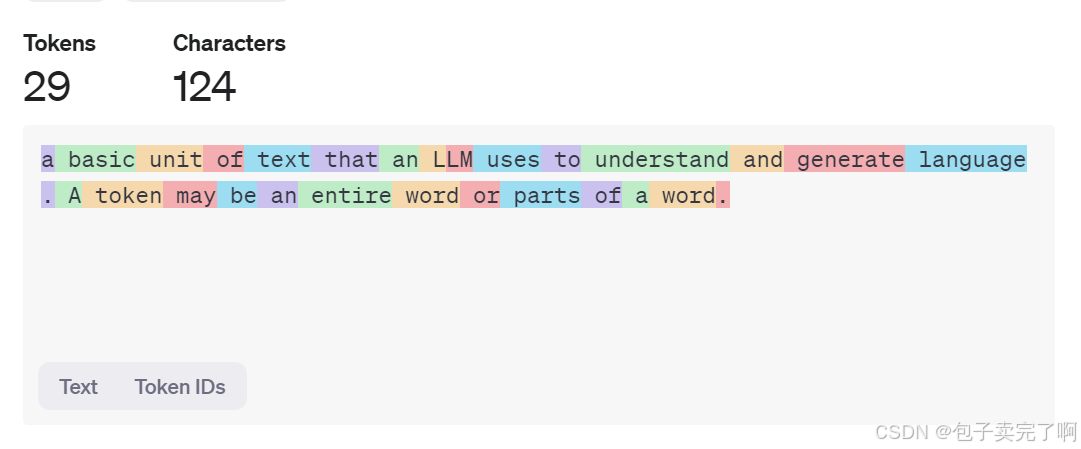
Token: a basic unit of text that an LLM uses to understand and generate language. A token may be an entire word or parts of a word.
-
词元:LLM(Large Language Mod,大模型)可以理解和生成语言的基本文本单位。他可以是整个单词或单词的一部分。
-
Training data: the information or examples given to an AI system to enable it to learn, find patterns, and create new content.
-
训练数据:提供给人工智能系统的信息或示例,使其能够学习、发现模式和创建新内容。
-
Transfer learning: A machine learning system that takes existing, previously learned data and applies it to new tasks and activities.
-
迁移学习:一种机器学习系统,它将现有的、以前学习过的数据应用于新的任务和活动。
-
Turing test: evaluate a machine’s ability to exhibit intelligence equal to humans, especially in language and behavior. When facilitating the test, a human evaluator judges conversations between a human and machine. If the evaluator cannot distinguish between responses, then the machine passes the Turing test.
-
图灵测试:评估机器表现出与人类同等智力的能力,尤其是在语言和行为方面。在测试时,人类评估员和人类、机器对话,如果评估者不能区分人类和机器,那么机器就通过了图灵测试。
-
Unstructured data: the data that is undefined and difficult to search. This includes audio, photo, and video content.
-
非结构化数据: 未定义且难以搜索的数据。如音频、照片和视频。
-
Unsupervised learning: a type of machine learning in which an algorithm is trained with unclassified and unlabeled data so that it acts without supervision.
-
无监督学习:用未分类和未标记的数据训练的一种机器学习算法,不需要监督。
-
Voice recognition: computers listen and interpret human dictation (speech) and produce written or spoken outputs
-
语音识别:计算机听取和理解人的口令(语音)并产生文字或语音输出。如Siri
Artificial Intelligence (AI) Terms: A to Z Glossary | Coursera

魔乐社区(Modelers.cn) 是一个中立、公益的人工智能社区,提供人工智能工具、模型、数据的托管、展示与应用协同服务,为人工智能开发及爱好者搭建开放的学习交流平台。社区通过理事会方式运作,由全产业链共同建设、共同运营、共同享有,推动国产AI生态繁荣发展。
更多推荐


 0
0 0
0- 0


 已为社区贡献1条内容

所有评论(0)