利用循环神经网络生成唐诗_PyTorch实现用于文本生成的循环神经网络
自然语言处理(NLP)有很多有趣的应用,文本生成就是其中一个有趣的应用。当一个机器学习模型工作在诸如循环神经网络、LSTM-RNN、GRU等序列模型上时,它们可以生成输入文本的下一个序列。PyTorch提供了一组功能强大的工具和库,这些工具和库为这些基于NLP的任务增添了动力。它不仅需要较少的预处理量,而且加快了训练过程。在本文中,我们将在PyTorch中训练几种语言的循环神经网络(RNN)。训练
自然语言处理(NLP)有很多有趣的应用,文本生成就是其中一个有趣的应用。
当一个机器学习模型工作在诸如循环神经网络、LSTM-RNN、GRU等序列模型上时,它们可以生成输入文本的下一个序列。
PyTorch提供了一组功能强大的工具和库,这些工具和库为这些基于NLP的任务增添了动力。它不仅需要较少的预处理量,而且加快了训练过程。

在本文中,我们将在PyTorch中训练几种语言的循环神经网络(RNN)。训练成功后,RNN模型将预测属于以输入字母开头的语言的名称。
PyTorch实现
这个实现是在Google Colab中完成的,其中的数据集是从Google驱动器获取的。所以,首先,我们将用Colab Notebook安装Google驱动器。
from google.colab import drivedrive.mount('/content/gdrive')现在,我们将导入所有必需的库。
from __future__ import unicode_literals, print_function, divisionfrom io import openimport globimport osimport unicodedataimport stringimport torchimport torch.nn as nnimport randomimport timeimport mathimport matplotlib.pyplot as pltimport matplotlib.ticker as ticker下面的代码片段将读取数据集。
all_let = string.ascii_letters + " .,;'-"n_let = len(all_let) + 1def getFiles(path): return glob.glob(path)# Unicode字符串到ASCIIdef unicodeToAscii(s): return ''.join( c for c in unicodedata.normalize('NFD', s) if unicodedata.category(c) != 'Mn' and c in all_let )# 读一个文件并分成几行def getLines(filename): lines = open(filename, encoding='utf-8').read().strip().split('') return [unicodeToAscii(line) for line in lines]# 建立cat_lin字典,存储每个类别的行列表cat_lin = {}all_ctg = []for filename in getFiles('gdrive/My Drive/Dataset/data/data/names/*.txt'): categ = os.path.splitext(os.path.basename(filename))[0] all_ctg.append(category) lines = getLines(filename) cat_lin[categ] = linesn_ctg = len(all_ctg)在下一步中,我们将定义module类来生成名称。该模块将是一个循环神经网络。
class NameGeneratorModule(nn.Module): def __init__(self, inp_size, hid_size, op_size): super(NameGeneratorModule, self).__init__() self.hid_size = hid_size self.i2h = nn.Linear(n_ctg + inp_size + hid_size, hid_size) self.i2o = nn.Linear(n_ctg + inp_size + hid_size, op_size) self.o2o = nn.Linear(hid_size + op_size, op_size) self.dropout = nn.Dropout(0.1) self.softmax = nn.LogSoftmax(dim=1) def forward(self, category, input, hidden): inp_comb = torch.cat((category, input, hidden), 1) hidden = self.i2h(inp_comb) output = self.i2o(inp_comb) op_comb = torch.cat((hidden, output), 1) output = self.o2o(op_comb) output = self.dropout(output) output = self.softmax(output) return output, hidden def initHidden(self): return torch.zeros(1, self.hid_size)以下函数将用于从列表中选择随机项,从类别中选择随机行
def randChoice(l): return l[random.randint(0, len(l) - 1)]def randTrainPair(): category = randChoice(all_ctg) line = randChoice(cat_lin[category]) return category, line以下函数将数据转换为RNN模块的兼容格式。
def categ_Tensor(categ): li = all_ctg.index(categ) tensor = torch.zeros(1, n_ctg) tensor[0][li] = 1 return tensordef inp_Tensor(line): tensor = torch.zeros(len(line), 1, n_let) for li in range(len(line)): letter = line[li] tensor[li][0][all_let.find(letter)] = 1 return tensordef tgt_Tensor(line): letter_indexes = [all_let.find(line[li]) for li in range(1, len(line))] letter_id.append(n_let - 1) # EOS return torch.LongTensor(letter_id)以下函数将创建随机训练示例,包括类别、输入和目标张量。
#损失criterion = nn.NLLLoss()#学习率lr_rate = 0.0005def train(category_tensor, input_line_tensor, target_line_tensor): target_line_tensor.unsqueeze_(-1) hidden = rnn.initHidden() rnn.zero_grad() loss = 0 for i in range(input_line_tensor.size(0)): output, hidden = rnn(category_tensor, input_line_tensor[i], hidden) l = criterion(output, target_line_tensor[i]) loss += l loss.backward() for p in rnn.parameters(): p.data.add_(p.grad.data, alpha=-lr_rate) return output, loss.item() / input_line_tensor.size(0)为了显示训练期间的时间,定义以下函数。
def time_taken(since): now = time.time() s = now - since m = math.floor(s / 60) s -= m * 60 return '%dm %ds' % (m, s)在下一步中,我们将定义RNN模型。
model = NameGenratorModule(n_let, 128, n_let)我们将看到定义的RNN模型的参数。
print(model)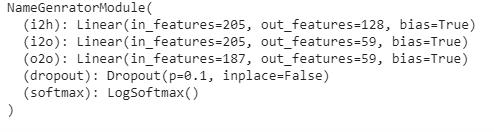
下一步,该模型将训练10000个epoch。
epochs = 100000print_every = 5000plot_every = 500all_losses = []total_loss = 0 # 每次迭代时重置start = time.time()for iter in range(1, epochs + 1): output, loss = train(*rand_train_exp()) total_loss += loss if iter % print_every == 0: print('Time: %s, Epoch: (%d - Total Iterations: %d%%), Loss: %.4f' % (time_taken(start), iter, iter / epochs * 100, loss)) if iter % plot_every == 0: all_losses.append(total_loss / plot_every) total_loss = 0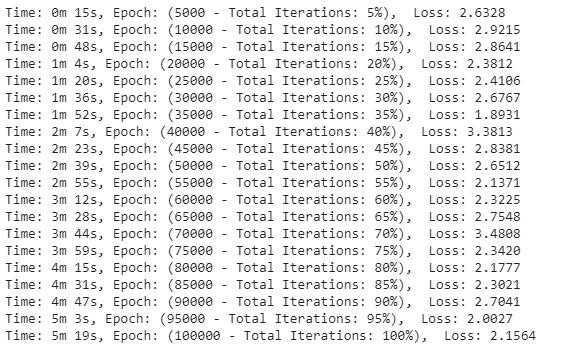
我们将可视化训练中的损失。
plt.figure(figsize=(7,7))plt.title("Loss")plt.plot(all_losses)plt.xlabel("Epochs")plt.ylabel("Loss")plt.show()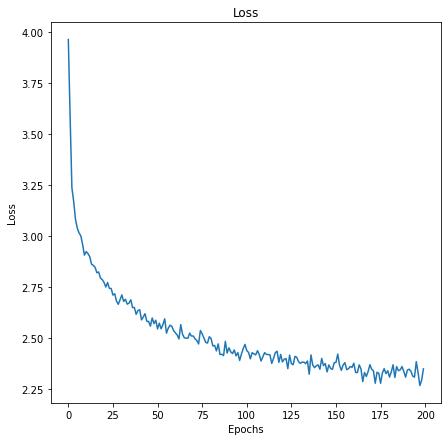
最后,我们将对我们的模型进行测试,以测试在给定起始字母表字母时生成属于语言的名称。
max_length = 20# 类别和起始字母中的示例def sample_model(category, start_letter='A'): with torch.no_grad(): # no need to track history in sampling category_tensor = categ_Tensor(category) input = inp_Tensor(start_letter) hidden = NameGenratorModule.initHidden() output_name = start_letter for i in range(max_length): output, hidden = NameGenratorModule(category_tensor, input[0], hidden) topv, topi = output.topk(1) topi = topi[0][0] if topi == n_let - 1: break else: letter = all_let[topi] output_name += letter input = inp_Tensor(letter) return output_name# 从一个类别和多个起始字母中获取多个样本def sample_names(category, start_letters='XYZ'): for start_letter in start_letters: print(sample_model(category, start_letter))现在,我们将检查样本模型,在给定语言和起始字母时生成名称。
print("Italian:-")sample_names('Italian', 'BPRT')print("Korean:-")sample_names('Korean', 'CMRS')print("Russian:-")sample_names('Russian', 'AJLN')print("Vietnamese:-")sample_names('Vietnamese', 'LMT')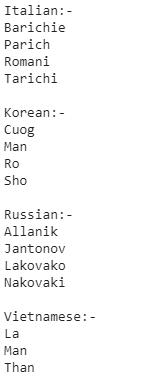
因此,正如我们在上面看到的,我们的模型已经生成了属于语言类别的名称,并从输入字母开始。
参考文献:
- Trung Tran, “Text Generation with Pytorch”.
- “NLP from scratch: Generating names with a character level RNN”, PyTorch Tutorial.
- Francesca Paulin, “Character-Level LSTM in PyTorch”, Kaggle.

魔乐社区(Modelers.cn) 是一个中立、公益的人工智能社区,提供人工智能工具、模型、数据的托管、展示与应用协同服务,为人工智能开发及爱好者搭建开放的学习交流平台。社区通过理事会方式运作,由全产业链共同建设、共同运营、共同享有,推动国产AI生态繁荣发展。
更多推荐



 0
0 0
0- 0


 已为社区贡献3条内容

所有评论(0)